

Engineering the Perfect Crisp
In the rapidly evolving landscape of modern kitchen appliances, the air fryer has emerged as a dominant force, promising the texture of deep-frying with a fraction of the oil. At the heart of this culinary revolution lies a critical component: the tubular heating element. While often visually resembling a simple metal coil, the air fryer heater is a sophisticated thermal device engineered to generate intense, rapid heat. It is the primary driver of the Maillard reaction—that chemical dance between amino acids and reducing sugars that gives fried food its characteristic brown crust and savory flavor.
The Mechanics of Rapid Air Technology
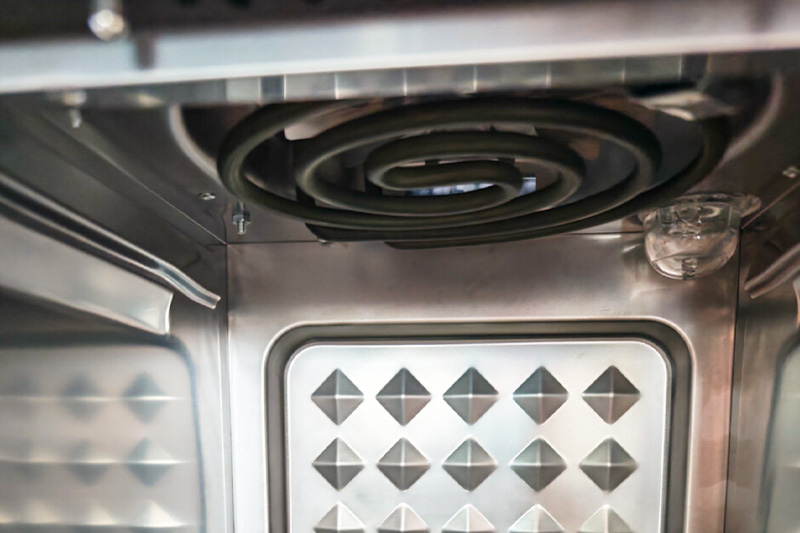
Unlike a conventional oven that heats a large cavity, an air fryer operates on the principle of rapid air technology within a compact chamber. The tubular heater in this context serves as the thermal source for a high-velocity convection current. Typically located at the top of the unit, directly above the food basket, the heater works in tandem with a high-speed fan.
The process is a continuous cycle of thermodynamics. The tubular element heats up almost instantly upon activation. The fan then forces air over this glowing element, superheating the air before blasting it downwards onto the food. This high-velocity stream of heat strips away moisture from the food's surface, creating a crispy layer while the internal moisture keeps the interior tender. The efficiency of this process relies entirely on the heater's ability to maintain a consistent surface temperature despite the cooling effect of the rushing air.
Design and Material Engineering
The construction of an air fryer heating element is a testament to materials science. It is technically a "sheathed" heater. Inside a metal tube—usually made of Stainless Steel (SUS304) or Incoloy—lies a resistance wire coil, typically Nickel-Chromium (NiCr). This coil is encased in highly compacted Magnesium Oxide (MgO) powder. The MgO acts as a dielectric insulator, preventing electrical shock, while efficiently conducting heat from the wire to the metal sheath.
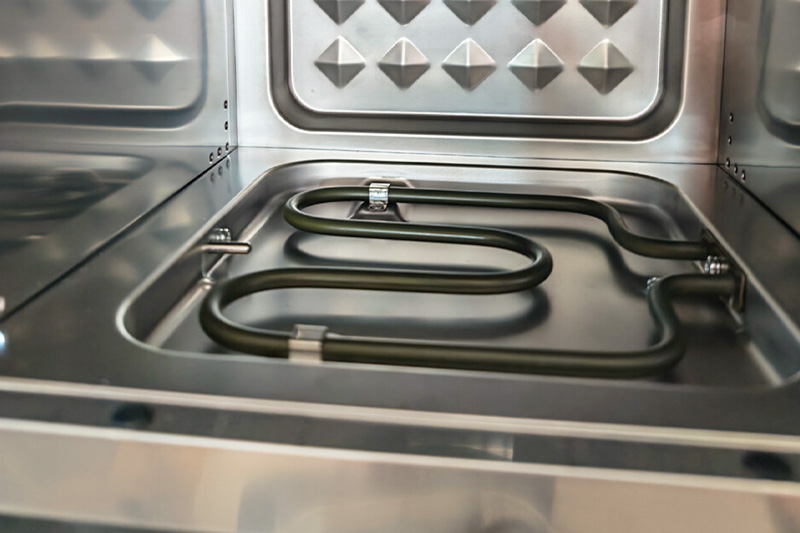
The shape of the tube is distinct. While older toasters used straight bars, air fryer heaters are almost exclusively spiral or "mosquito coil" shaped. This geometry is not aesthetic; it is functional. By spiraling the tube, engineers maximize the surface area within a limited circular footprint. This ensures that the heat is distributed over a wider diameter, preventing "hot spots" that would burn the center of a chicken breast while leaving the edges raw.
Furthermore, the surface of the heater is often treated. Many manufacturers utilize a non-stick coating or a specialized quartz glazing. This serves a dual purpose: it prevents food splatter and grease from baking onto the element (which would cause smoking and unpleasant odors) and it facilitates easier cleaning.
Critical Applications and Safety
The tubular heater in an air fryer must operate under extreme conditions. It is a "dry burn" element, meaning it is not submerged in liquid but exposed to air and grease.
- High-Temperature Endurance: The element must withstand temperatures ranging from ambient to over 400°C repeatedly. The materials chosen must resist oxidation and thermal fatigue (cracking due to expansion and contraction).
- Grease Management: In an air fryer, fat renders out of the food and can drip. The heater must be designed to handle this. If the surface temperature is too high relative to the wattage density, the grease can carbonize instantly, creating smoke. Our engineering focuses on optimizing the watt density to minimize this risk.
- Safety Integration: Modern tubular heaters are often paired with thermal fuses or thermostats directly attached to the sheath. If the fan fails or the airflow is blocked, the temperature of the element can spike dangerously. The integrated safety mechanisms cut power instantly to prevent fire hazards.
Our Company's Technological Edge
In a market saturated with generic components, our company distinguishes itself through precision engineering and material excellence. We understand that the heating element is the heartbeat of the air fryer.
- Optimized Watt Density: We calculate the precise watt density (W/cm²) required for air frying. This ensures the element gets hot enough to crisp food quickly but not so hot that it degrades the metal sheath or burns food residue instantly.
- Advanced Swaging Technology: We use high-density swaging to compact the Magnesium Oxide insulation. This eliminates voids that could lead to hot spots or early failure, ensuring the heater has a long operational life even with daily use.
- Custom Geometries: We specialize in custom bending and shaping. Whether a client needs a specific spiral diameter, a unique leg configuration for mounting, or a specialized non-stick coating, our manufacturing capabilities allow us to tailor the element to the specific airflow dynamics of the appliance.
By integrating our high-performance tubular heating elements, air fryer manufacturers can guarantee faster cook times, more consistent results, and a safer user experience. We don't just heat air; we engineer the perfect environment for flavor.
Note: The heating element is a high-temperature component. Always ensure the appliance is unplugged and cooled completely before attempting any cleaning or maintenance to avoid burns or electrical shock.


