
Details
Product Overview
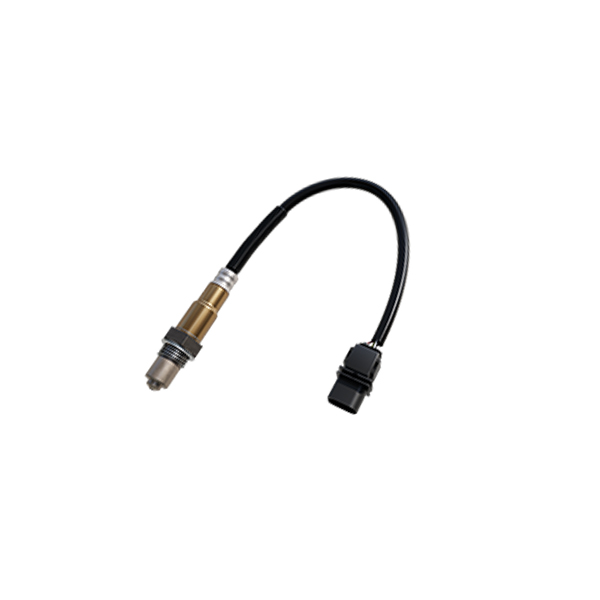
Our Lambda Sensors are precision oxygen sensors designed to monitor and control the air-fuel ratio (Lambda) in combustion systems. By accurately measuring the residual oxygen in exhaust gases, these sensors enable real-time adjustments to the fuel mixture, ensuring optimal combustion efficiency, reduced emissions, and lower fuel consumption.
We offer specialized sensor solutions for two distinct markets: high-performance automotive/industrial engines and residential/commercial pellet boilers. Whether you need to tune a racing engine or automate a biomass heating system, our Lambda sensors provide the critical data required for clean and efficient operation.
Product Lines
We provide two distinct sensor families tailored to the specific thermal and chemical environments of your application.
1. Wideband Lambda Sensors for Engines
Designed for automotive, marine, and industrial engine tuning and monitoring.
Application: Engine tuning, dyno testing, exhaust gas analysis, and ECU integration.
Key Features:
Wideband Technology: Measures a broad Air-Fuel Ratio (AFR) range (typically 10:1 to 30:1), unlike narrowband sensors that only detect stoichiometry.
Fast Response Time: Critical for real-time engine management and detecting lean/rich spikes during rapid acceleration.
High Temperature Resistance: Built to withstand the extreme heat and vibration of internal combustion engines.
Analog & Digital Output: Compatible with standalone gauges, data loggers, and Engine Control Units (ECU).
2. Lambda Sensors for Pellet Boilers
Optimized for biomass combustion control in heating systems.
Application: Pellet stoves, wood chip boilers, and biomass heating plants.
Key Features:
Combustion Control: Helps the boiler controller adjust the fan speed and pellet feed rate to maintain ideal combustion (Lambda ~1.5 for biomass).
Energy Efficiency: Prevents heat loss through the chimney by avoiding over-oxygenation (too much excess air).
Emission Reduction: Minimizes CO and particulate matter emissions by keeping the burn in the optimal zone.
Soot Resistance: Designed to handle the specific byproducts of wood pellet combustion.
Key Benefits
Maximize Efficiency: precise control of the air-fuel ratio ensures that every drop of fuel or pellet is burned completely, saving money and energy.
Reduce Emissions: Maintaining the correct Lambda value significantly lowers harmful exhaust emissions (CO, NOx, and HC), helping you meet environmental regulations.
Protect Equipment: Prevents engine damage from running too lean (overheating) or too rich (fouling), and prevents boiler soot buildup or flameouts.
Real-Time Data: Provides immediate feedback on combustion health, allowing for proactive maintenance and tuning.
Technical Specifications
Parameter Engine Sensors (Wideband) Pellet Boiler Sensors
Sensor Type Wideband ZrO2 (Zirconia) Limit Current / Wideband
Lambda Range 0.7 to 4.0 (AFR 10:1 to 60:1) 1.0 to 3.0 (Typical Biomass Range)
Operating Temp Up to 900°C (Exhaust) Up to 700°C (Flue Gas)
Response Time < 100ms (T90) < 1s (Sufficient for boiler dynamics)
Output Signal 0-5V Analog / Serial Data 0-10V / 4-20mA / Modbus
Thread Size M18x1.5 / 18mm (Standard automotive) M20 / G1/2 / Custom flange
Heater Voltage 12V (Internal heater for fast light-off) 12V / 24V / 230V (AC/DC)
Applications
Sector Use Cases
Automotive & Marine Turbocharged engines, diesel tuning, marine inboards, racing vehicles.
Industrial Engines Generators, pumps, agricultural machinery, forklifts.
Residential Heating Pellet stoves, pellet boilers, wood gasification boilers.
Commercial Heating District heating plants, industrial biomass boilers.
Installation & Integration
Engine Applications: The sensor is typically welded or bolted into the exhaust manifold or downpipe. It requires a controller (like the LC-2 or MTX-L Plus) to interpret the signal and display the AFR/Lambda value.
Boiler Applications: The sensor is installed in the flue gas outlet. It connects directly to the boiler's main control board to automate the air intake damper and pellet auger speed.


